
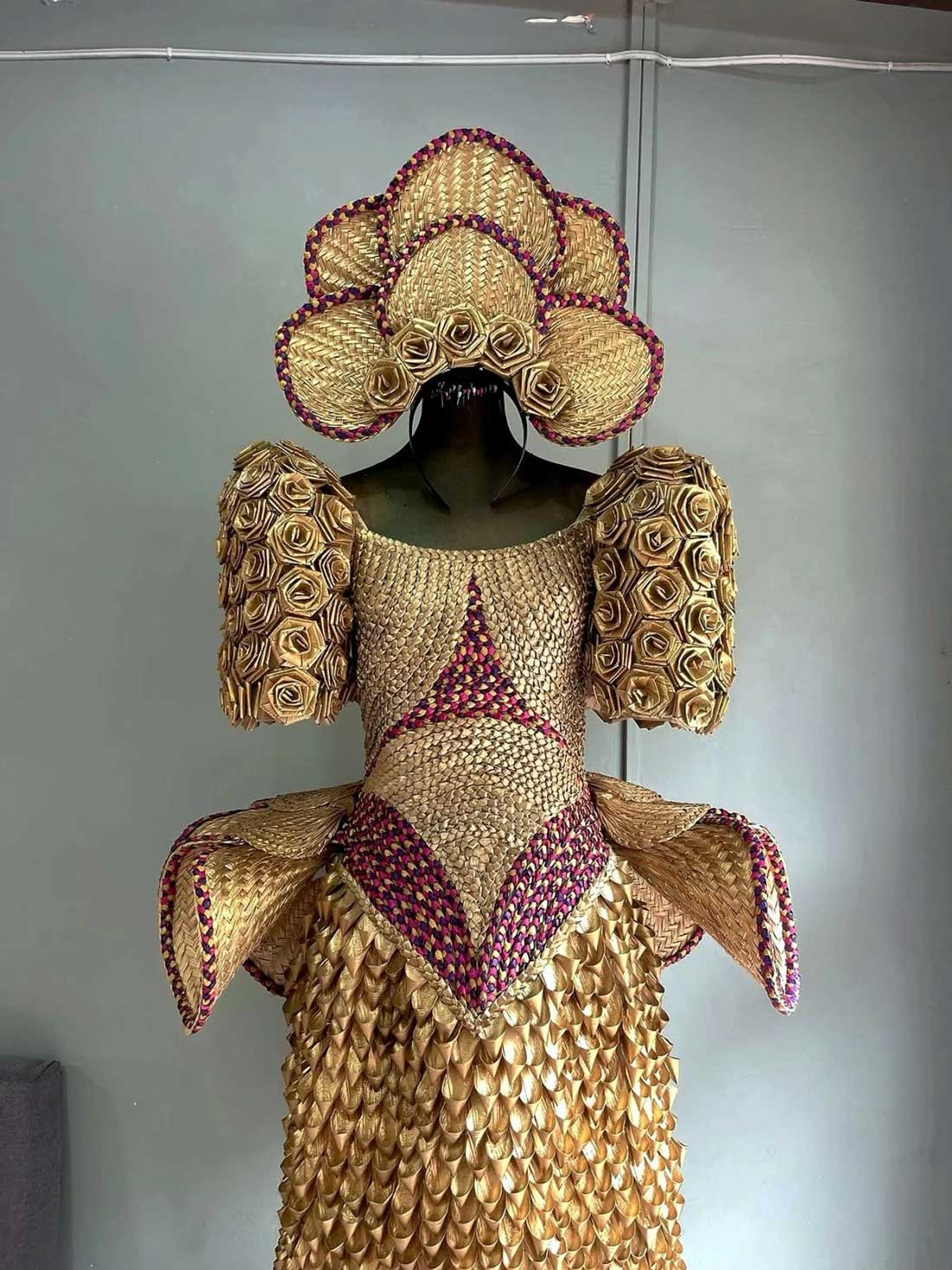
A Fashion Designer Turning Natural Materials Into Wearable Art
What if a beautiful evening gown could be created from materials usually found in forests or discarded as waste? In Odiongan, Romblon, 27-year-old fashion designer and model Adrian “Madam Pilikitok” Gallano is making that idea a reality through unconventional gowns crafted from bamboo, banana leaves, palm leaves, and even marble.
Her latest creation is a bamboo gown featuring intricate patterns made from carefully cut pieces of the natural material. Rather than following conventional fashion techniques, Gallano relies on experimentation, imagination, and the resources available around her.
Her journey is particularly interesting because she holds a degree in public administration rather than formal fashion training. Yet her passion for art has allowed her to develop a distinctive approach to gown-making that has attracted attention both in the Philippines and abroad.
From a Viral Banana Leaf Dress to Bamboo Fashion
Gallano’s unconventional fashion journey began during the pandemic. While bathing in a river, she noticed fallen banana leaves and decided to collect them for an unusual creative project.
She transformed the leaves into a dress, slightly burning their edges to create a drooping effect around the waist. The resulting silhouette resembled the dramatic fiery gown worn by Katniss Everdeen in The Hunger Games.
A video of her creation eventually went viral, introducing her work to a wider audience and encouraging her to experiment with more materials.
Since then, she has continued developing gowns using elements from nature. Her bamboo creation represents another step in that journey, combining intricate patterns with a material more commonly associated with construction and handicrafts.
For Gallano, discarded materials should not automatically be considered useless. She sees opportunities to turn things that people throw away into something creative and valuable.
How Her Family Helped Create the Bamboo Gown
Behind Gallano’s elaborate designs is a family that actively participates in bringing her ideas to life. Her parents, Anely and Artagnan, are among her most important collaborators.
The concept for the bamboo gown actually came from her 64-year-old mother, Anely. Her 63-year-old father, Artagnan, helped gather the materials and contributed to the construction and design process.
Artagnan collected 10 long bamboo poles from a forest. Before the material could be used, he removed the outer layers and cleaned the bamboo in preparation for the gown.
The process required patience because the bamboo needed almost a month to dry. The family also had to carefully prepare the pieces and shape them into the patterns needed for the finished garment.
One of the biggest challenges was creating six different patterns for the gown. The intricate arrangement required careful work to make the overall design attractive and consistent.
Gallano explained that constructing the gown’s shapes was the most difficult part. Fortunately, her parents’ assistance and occasional help from neighbors made the lengthy process more manageable.
Family Support Beyond Fashion
For Gallano, working with her parents means more than having additional hands during production. Their involvement also represents acceptance and encouragement.
As a transgender designer, she values the support her parents have given her throughout her creative journey. She has spoken about how meaningful it is to experience their acceptance, particularly because some families find it difficult to understand and accept children who belong to the LGBT community.
Her father’s participation is especially visible in the making process, where he helps weave and prepare materials for her creations.
This family collaboration gives her gowns another dimension. Each finished piece reflects not only her imagination but also the time, patience, and effort shared by the people closest to her.
Creating Gowns Without Traditional Fashion Sketches
Unlike designers who begin with detailed illustrations, Gallano prefers developing her creations as the work progresses. She does not regularly rely on formal sketches to determine the final appearance of a gown.
She recalled sketching a design only once for a dress commissioned for the inauguration of their mayor. She explained that she is more comfortable working freely, allowing herself to change patterns, add details, or remove elements whenever necessary.
This flexible approach gives her room to experiment. Instead of following a fixed blueprint, she allows the available materials and her creative ideas to influence the final design.
That freedom also comes with challenges, particularly when working with materials that behave differently from conventional fabrics.
From Bamboo and Leaves to Romblon Marble
Working with marble presented one of Gallano’s most demanding design challenges. The material is especially meaningful because Romblon is widely recognized as the marble capital of the Philippines.
The idea to incorporate marble into a gown came from her supporters. However, turning a heavy and rigid material into part of a wearable garment required considerable experimentation.
She had to figure out how to attach the marble securely, arrange it into the design, and make sure it would remain in place despite its weight.
Gallano has also created gowns using palm leaves, demonstrating her continuing interest in transforming natural materials into distinctive fashion pieces.
These projects highlight an important part of her creative process: she does not limit herself to materials traditionally associated with clothing. Instead, she looks at what is available and considers how it might become part of a garment.
From Odiongan to International Clients
Although Gallano is based in Odiongan, her creations have reached beyond the Philippines. One of her clients is a Filipina living in the United States who commissioned a gown intended to represent Filipino culture abroad.
The client gave Gallano considerable creative freedom, allowing her to determine the design herself. For the creation, she incorporated an abaniko, a traditional hand fan made from native leaves such as anahaw or buri.
The project demonstrates how locally inspired materials and Filipino cultural elements can become part of fashion intended for an international audience.
For overseas Filipinos, clothing can also serve as a way to express cultural identity. A gown incorporating traditional materials and recognizable Filipino design elements offers an opportunity to showcase that heritage during events abroad.
How Much Do Adrian Gallano’s Gowns Cost?
Gallano’s creations are available at different prices depending on the materials used and the specifications requested by clients.
Based on the reported pricing, purchasing one of her gowns costs between ₱16,000 and ₱30,000. Customers who prefer not to purchase a complete gown can also explore rental arrangements.
| Service | Price |
|---|---|
| Gown purchase | ₱16,000–₱30,000 |
| Gown rental | ₱3,000–₱5,000 |
| Rental period | 2–3 days |
The final cost depends on the chosen materials and the client’s requirements. Anyone interested in commissioning or renting a creation should confirm availability, design options, and current pricing directly with Gallano.
Six Years of Creativity, Patience, and Determination
Over the past six years, gown-making has become an important outlet for Gallano’s artistic expression. Her growing audience has brought recognition, but it has also exposed her to criticism and negative comments.
Instead of allowing those experiences to stop her, she has used them as motivation to continue improving her work. She remembers starting with whatever materials she could find and gradually developing creations that now reach clients overseas.
Her experience demonstrates that a creative career does not always follow a traditional path. Formal education can provide valuable knowledge, but passion, persistence, and practical experimentation can also help someone develop a distinctive craft.
Her Dream of Holding a Fashion Runway Show
Despite the attention her gowns have received, Gallano still has bigger ambitions. Her immediate goal is to pursue fashion design full-time while continuing to develop her unconventional creations.
She also dreams of presenting her collections in a runway show, where models can wear her designs before an audience. For someone who began experimenting with materials during the pandemic, this would represent another significant milestone.
However, the most rewarding moments for her are not necessarily the attention or recognition. She particularly treasures the occasions when she finally wears a gown that she and her parents worked together to create.
Seeing an audience applaud and witnessing the happiness on her parents’ faces make the long hours of preparation worthwhile.
Frequently Asked Questions About Romblon’s Bamboo Fashion Designer
1. Who is Adrian Madam Pilikitok Gallano?
Adrian “Madam Pilikitok” Gallano is a 27-year-old transgender fashion designer and model based in Odiongan, Romblon. She is known for creating unconventional gowns using natural materials such as bamboo, banana leaves, palm leaves, and marble.
2. How much does one of her gowns cost?
Her gowns cost between ₱16,000 and ₱30,000, depending on the materials and design requirements. Rental options range from ₱3,000 to ₱5,000 for two to three days.
3. Where is the bamboo gown designer based?
Gallano is based in Odiongan, Romblon, in the MIMAROPA region of the Philippines. Her creations have also reached international clients, including a Filipina living in the United States.
Romblon’s Creative Talent Deserves a Bigger Stage
Adrian Gallano’s journey shows how creativity can emerge from unexpected places and materials. What began with banana leaves collected during a river bath eventually developed into a collection of unconventional gowns that includes bamboo, palm leaves, and marble.
Her story is also about family support, determination, and the willingness to pursue an artistic passion without following a conventional career path.
As she works toward her goal of becoming a full-time fashion designer and presenting her collections on a runway, her creations continue to introduce a different side of Romblon to audiences at home and abroad.
For anyone interested in Filipino fashion, local craftsmanship, or creative entrepreneurship, Gallano’s work is worth following. Her journey reminds us that inspiration does not always come from expensive fabrics or traditional materials. Sometimes, it begins with simply looking at nature and imagining what else it can become.