
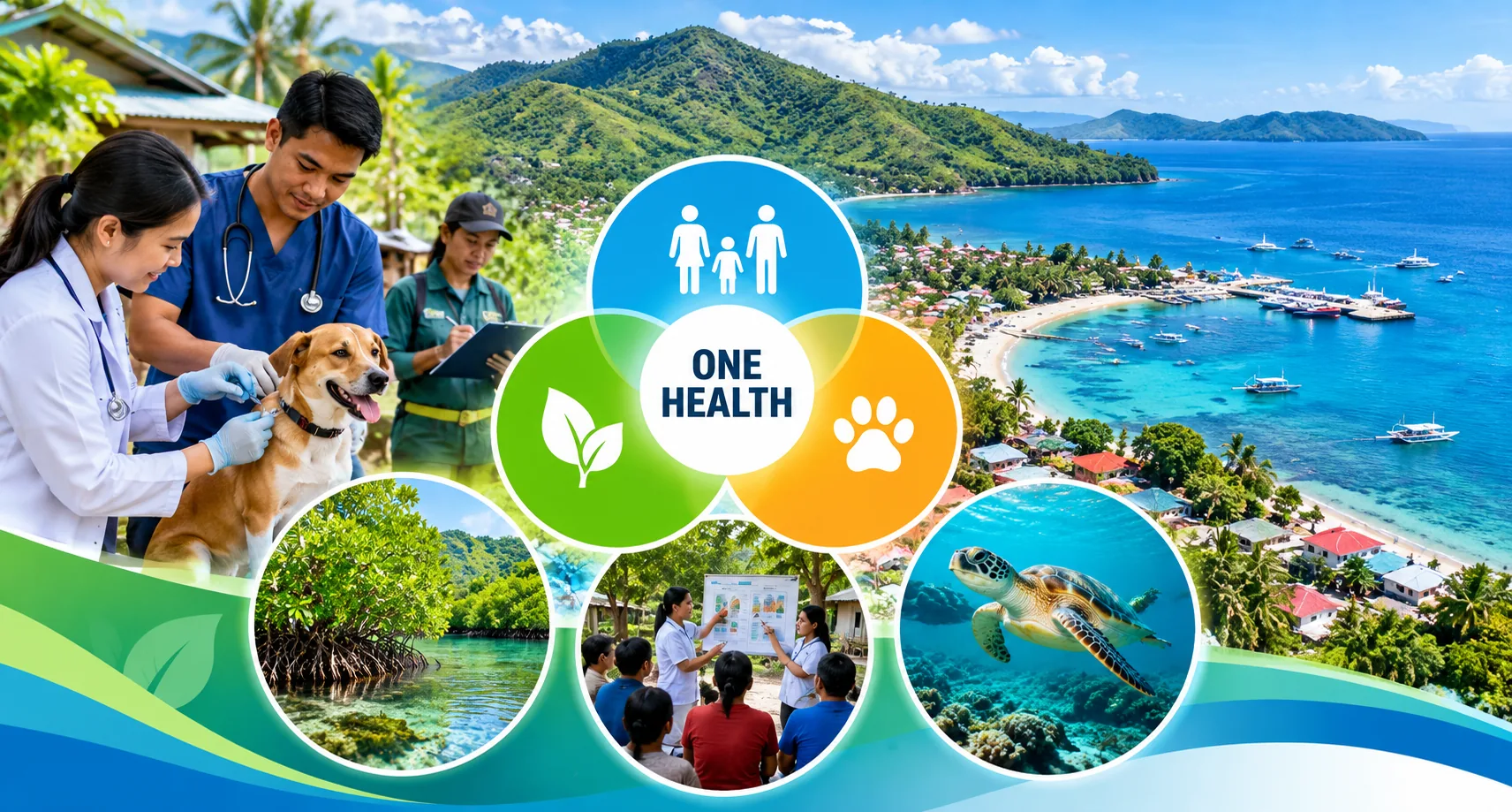
How One Health Policymaking Is Taking Shape in Alcantara, Romblon
Protecting a community’s health can require more than medical services. Animal diseases, environmental conditions, public health surveillance, and local government decisions can all influence how effectively a community prevents and responds to health threats.
In Alcantara, Romblon, the Ateneo School of Medicine and Public Health’s Center for Research and Innovation (ACRI) has supported efforts to strengthen local policymaking through evidence and collaboration. The initiative is connected to the broader goal of helping Philippine local governments use research and surveillance information when developing public health policies.
The work forms part of the Strengthening Evidence-based One Health Policymaking and Implementation in the Philippines (SOHIP) project. The initiative examined how evidence can inform municipal decisions and how different sectors can coordinate their responses to health concerns affecting people, animals, and the environment.
What Does the One Health Approach Mean?
One Health is a collaborative approach that recognizes the connections between human health, animal health, and environmental conditions. It encourages government agencies, health professionals, veterinary workers, researchers, and other stakeholders to work together rather than address related problems in isolation.
For example, rabies prevention requires more than treating people after animal bites. Effective prevention also depends on animal vaccination, disease surveillance, communication between health and veterinary personnel, public awareness, and coordination among local authorities.
Similar cooperation can be useful when addressing zoonotic diseases, which can spread between animals and humans, and antimicrobial resistance, which threatens the effectiveness of medicines used to treat infections.
In the Philippines, implementing this approach at the municipal level is particularly important because local governments have responsibilities for delivering public services. Research can help identify gaps in existing systems and inform decisions about which interventions may be practical and effective.
ACRI’s Role in Evidence-Based Local Decisions
ACRI is the research unit of the Ateneo School of Medicine and Public Health at Ateneo de Manila University. Its work includes health systems, environmental health, and research intended to support practitioners, policymakers, and communities.
Through the SOHIP project, researchers examined factors that influence the development and implementation of One Health policies in Alcantara. The project also involved helping policy stakeholders make better use of surveillance information for early warning and response.
Another part of the initiative involved developing tools and frameworks collaboratively with stakeholders. This approach allows people involved in local implementation to contribute their experience and helps connect research findings with the practical realities of municipal governance.
Evidence-informed policymaking does not mean that research automatically determines every government decision. Instead, it provides decision-makers with information that can be considered alongside available resources, community needs, institutional responsibilities, and local circumstances.
Why Rabies Prevention Highlights the Need for Coordination
Rabies illustrates why cooperation between human and animal health services is essential. Once clinical symptoms develop, rabies is almost always fatal, making prevention, prompt assessment after potential exposure, and timely access to appropriate medical care critically important.
Research on rabies response in Romblon has identified challenges involving disease testing, recordkeeping, reporting, communication between sectors, community awareness, and dog vaccination. The island province’s geography and the decentralized organization of health and animal services can make coordination more difficult.
A study published in BMJ Global Health in 2026 examined the One Health response to a rabies outbreak in Romblon. The research described how stakeholders used process mapping to identify weaknesses in surveillance and outbreak response and develop potential solutions.
These findings illustrate the practical value of bringing different sectors together. Better reporting procedures, staff training, information sharing, and coordinated animal vaccination efforts can help strengthen prevention and response systems.
However, research findings should not be interpreted as proof that every identified challenge has already been resolved in Alcantara. Long-term progress depends on implementation, resources, coordination, and continued evaluation.
Frequently Asked Questions About One Health in Romblon
What is the SOHIP project?
SOHIP stands for Strengthening Evidence-based One Health Policymaking and Implementation in the Philippines. It focuses on improving the use of evidence in local policy development and implementation, including work conducted in Alcantara, Romblon.
Why is local surveillance important?
Surveillance helps public health and veterinary teams identify potential disease threats, monitor patterns, and respond to emerging problems. Useful information must be recorded, shared, and interpreted effectively so that relevant agencies can coordinate their actions.
How can communities support One Health?
Residents can follow official vaccination and animal-bite prevention guidance, seek prompt medical assessment after possible rabies exposure, report relevant animal health concerns to appropriate authorities, and participate in community health initiatives.
What Comes Next for Evidence-Informed Health Policy?
The work in Alcantara demonstrates how research institutions and local stakeholders can collaborate to strengthen public health decision-making. Its broader significance lies in developing approaches that connect scientific evidence with the responsibilities and needs of local governments.
For these efforts to have lasting value, useful findings must be translated into workable policies, supported by adequate resources, and evaluated over time. Continued collaboration between municipal authorities, health workers, animal health professionals, researchers, and communities can help identify gaps and improve preparedness.
Readers seeking updates about the initiative can consult Ateneo de Manila University’s official announcements and the municipality’s public information channels. These sources can provide further information about project developments, local health programs, and opportunities for community participation.
Sources: Ateneo de Manila University: ACRI and One Health policymaking in Alcantara, Romblon; BMJ Global Health research on the One Health response to a rabies outbreak in the Philippines; ACRI environmental health research.