
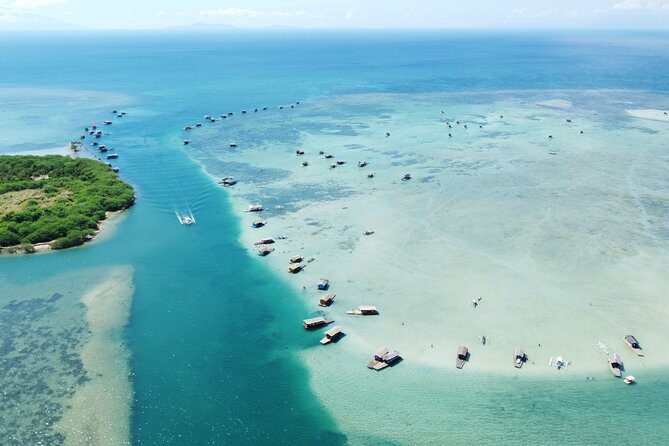
How I Found Paradise in a Tiny Bamboo Cottage in the Philippines
I’ve been a travel writer for over a decade, chasing sunsets from the cliffs of Santorini to the glaciers of Patagonia. But nothing—absolutely nothing—prepared me for the moment I stepped onto a wooden plank bridge on a remote island in the Philippines, facing a tiny bamboo cottage perched over crystal-clear turquoise water. That was the day I stopped writing about paradise and started living it.
Palawan, often called the “Last Ecological Frontier” of the Philippines, is not just another island destination. It’s a lesson in humility. The moment you leave Puerto Princesa airport, the air shifts—thicker with salt, coconut, and frangipani. But to truly understand Palawan, you have to go beyond El Nido and Coron. You have to find the bamboo cottage.
The Journey to Quietude: Island-Hopping Palawan’s Secret Gems
Most travelers flock to the famous lagoons of El Nido. And yes, the Big Lagoon and Small Lagoon are spectacular—limestone cliffs rising from emerald waters like ancient guardians. But the real magic lies beyond the usual routes. The Bacuit Archipelago holds over 40 islands, and the ones without large resorts are where Palawan feels most alive.
My route was simple but intentional:
- El Nido to Lagen Island – a private bangka transfer taking around 90 minutes
- Lagen to a hidden bamboo cottage – no GPS, no check-in desk, just a local guide named Jun pointing toward a structure half-hidden by palm fronds
When I asked Jun why the cottage existed, he smiled and said, “For people who need to find themselves.”
A Cottage Built by Hands, Not Machines
The bamboo cottage was a study in intentional simplicity. Roughly 12 square meters in size, it stood on stilts above the water. The walls were woven from nipa palm, and every step on the wooden floor creaked softly—like the house was breathing with the tide.
What made it unforgettable:
- No electricity after 9 PM – lanterns and moonlight took over
- A single unglazed window facing east – sunrise poured directly into the room
- A hammock on the porch – where I watched fish and stingrays move beneath the surface
What experts call “low-impact accommodation,” I experienced as a full reset. The cottage was built by Jun and his family using bamboo sourced from the island itself. No concrete, no Wi-Fi—just the sea, the wind, and time slowing down.
The Art of Doing Absolutely Nothing
The first 24 hours felt uneasy. My mind, used to constant input, kept reaching for distraction. By the second day, that noise faded.
I learned that stillness isn’t emptiness—it’s awareness.
A typical day in the bamboo cottage looked like this:
- 5:30 AM – Paddle kayak to a nearby coral garden and snorkel alone
- 9:00 AM – Breakfast of mango, tapsilog, and strong Filipino coffee delivered on a floating bamboo tray
- 12:00 PM – Nap in the hammock as the tide rose beneath the floor
- 3:00 PM – Walk to a hidden lagoon along a faint island trail
- 6:00 PM – Sunset that shifted from gold to violet without effort or filter
In that silence, I understood why Palawan is consistently ranked among the world’s most beautiful islands. It isn’t just the landscape—it’s the absence of performance. The island doesn’t try to impress you. It simply exists.
Palawan’s Real Treasure: The Local Guardians
Beyond the scenery, the real depth of Palawan is its people. I spent time with Jun and his family, learning how they live in rhythm with the sea.
He showed me how to weave a buyo, a traditional betel nut preparation, and spoke about sea turtles nesting on nearby shores between May and August. His father, he said, navigated by stars long before GPS ever existed.
Local insights worth knowing:
- Best travel window: November to May for calm seas and clear skies
- For real isolation: avoid main El Nido town and look for stays on Linapacan or smaller surrounding islands
- Follow the “No Plastic” policies in many communities—bring reusable bottles and gear
- Learn simple Tagalog or Cuyonon phrases like “Salamat” (thank you)
Palawan is now a UNESCO Biosphere Reserve, and many areas are managed by local cooperatives to protect reefs and lagoons. The bamboo cottage I stayed in was part of a community-based eco-tourism project—proof that travel and preservation can coexist.
The Sunrise That Changed Everything
On my final morning, I woke before dawn. The tide was unusually low, revealing a sandbar stretching into the sea. I walked barefoot across it as the horizon began to glow.
Far out, a small pod of dolphins surfaced—silent, effortless, almost unreal in their timing.
I didn’t reach for my camera. I didn’t need to.
That moment wasn’t about capturing anything. It was about being there—fully.
That is what the bamboo cottage gives you: space to strip away everything unnecessary until only the essential remains.
Practical Tips for Your Own Bamboo Cottage Escape
If this kind of experience calls to you, here’s how to plan it:
- Book directly with local eco-lodges or community operators
- Pack light: reef-safe sunscreen, insect repellent, headlamp, dry bag, cash
- Stay flexible—weather can change boat schedules quickly
- Plan at least 2–3 nights in a remote island stay for proper disconnection
Final Thoughts: Are You Ready to Find Your Paradise?
Writing this now, I’m far from Palawan, sitting in a city that never slows down. But part of me is still there—in that bamboo cottage, listening to the tide move beneath the floor.
Palawan taught me something simple: paradise isn’t a place you find. It’s a state you allow.
And sometimes, all it takes is a bamboo cottage, a quiet sea, and enough time to finally hear yourself think.
The Philippines is still there, waiting quietly—somewhere off the coast of Palawan, where the water is clear, and the world feels just a little more honest.