
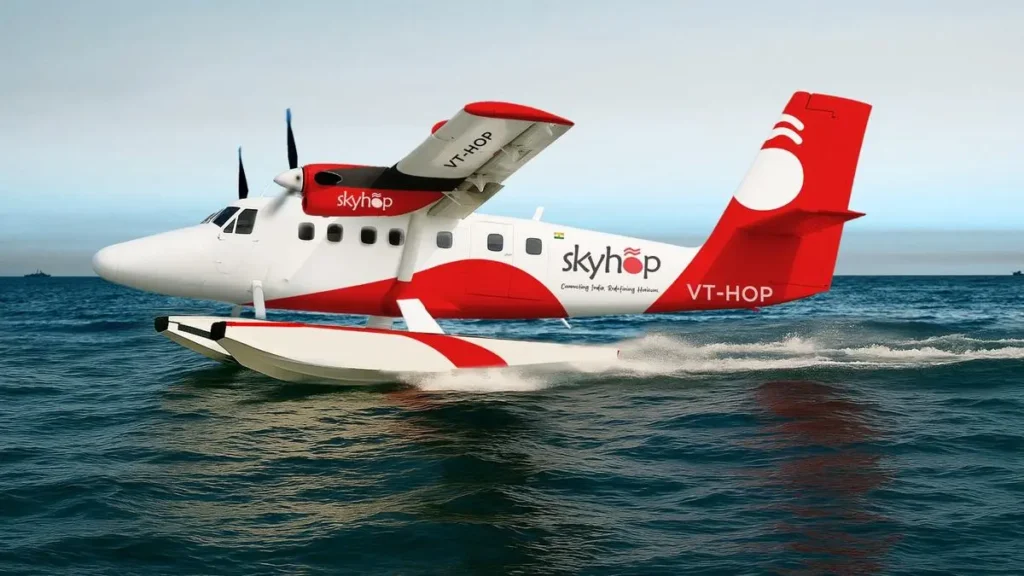
SkyHop Revolutionizes Island Hopping with Electric Air Taxi Test Flight
The dream of seamlessly skipping between tropical islands, bypassing crowded ferries and long travel times, has just taken a monumental leap toward reality. In a move that signals a bold new era for regional travel, SkyHop has successfully conducted a groundbreaking test flight of its electric Vertical Take-Off and Landing (eVTOL) aircraft in Rishikesh, India. This isn’t just a prototype test; it’s a clear declaration that the future of island hopping is electric, sustainable, and thrillingly efficient.
For decades, island hopping has been defined by rigid ferry schedules, weather-dependent boat services, and limited reach. SkyHop’s vision shatters these constraints, promising a network of quiet, zero-emission air taxis that can connect islands, coastal towns, and remote communities in a fraction of the time. The Rishikesh test flight is the crucial first step in turning this vision into a commonplace travel experience.
Why Rishikesh? The Perfect Proving Ground
At first glance, Rishikesh, nestled in the Himalayan foothills along the Ganges River, might seem an unusual choice for an island-hopping technology test. However, it was a strategically brilliant selection. The location provided a challenging and diverse environment that perfectly simulates the conditions of archipelagos.
The terrain around Rishikesh, with its river valleys, varying elevations, and unpredictable wind patterns, offered a rigorous test bed far more demanding than a flat, controlled airfield. Successfully navigating this environment proves the aircraft’s stability, safety, and adaptability—key attributes for operations over open water and between islands with differing topographies. This successful flight demonstrates that the technology is ready for real-world, complex routing.
Meet the Future: SkyHop’s eVTOL Aircraft
The star of the show is SkyHop’s innovative eVTOL vehicle. Designed from the ground up for short-haul, high-frequency routes, it embodies the next generation of aerial mobility.
Key Features & Specifications:
- Zero Emissions: Fully electric propulsion means silent, clean flights with no carbon footprint, preserving the pristine environments of island destinations.
- Vertical Take-Off and Landing: Requires minimal infrastructure—no need for long runways. A simple landing pad or “vertiport” is enough, enabling access to the heart of islands or small coastal villages.
- Impressive Range & Capacity: Early specifications suggest a range perfect for island networks (approximately 150-250 km per charge) with capacity for a pilot and 4-5 passengers, ideal for small groups and families.
- Advanced Safety Systems: Featuring redundant propulsion systems and state-of-the-art avionics for maximum safety during over-water flights.
Transforming the Island Hopping Experience: What Changes?
The implications of this technology for travelers and destinations are profound. The classic island-hopping itinerary is about to be completely reimagined.
For the Traveler:
- Time is Rediscovered: A journey that might take a half-day via multiple ferries could be reduced to a 20-30 minute scenic flight. This dramatically expands what’s possible in a single vacation.
- Unprecedented Access: Remote, less-visited islands that have limited or infrequent ferry service become easily accessible, promoting sustainable tourism dispersal.
- Luxury in the Sky: The experience shifts from a utilitarian ferry ride to a breathtaking, low-altitude aerial tour, offering stunning views of atolls, reefs, and coastlines.
- Simplified Logistics: Book flights on-demand or via an app, with seamless digital integration for entire multi-island itineraries.
For Island Destinations:
- Economic Boost: Improved connectivity can drive tourism to lesser-known islands, distributing economic benefits more evenly across regions.
- Reduced Congestion: Easing dependency on diesel ferries can reduce port crowding and marine traffic.
- Sustainable Profile: Adopting clean air mobility enhances a destination’s commitment to eco-tourism, appealing to the conscious modern traveler.
- Essential Services: The technology isn’t just for tourists; it enables rapid medical evacuations, delivery of urgent supplies, and efficient inter-island commuting for residents.
Navigating the Flight Path to Reality: Challenges & Next Steps
While the test flight is a phenomenal success, the journey to commercial operation involves crucial next steps. SkyHop and the broader Advanced Air Mobility (AAM) industry must now navigate:
- Regulatory Certification: Working closely with aviation authorities worldwide (like the FAA, EASA, and DGCA in India) to certify the aircraft as safe for commercial passenger service is the single most important hurdle.
- Infrastructure Development: Building a network of “vertiports” with charging stations at key islands and hubs. This requires investment and collaboration with local governments and private entities.
- Public Acceptance & Affordability: Introducing the concept of air taxis to the public and ensuring the service is priced accessibly, at least competitively with premium ferry or seaplane options, will be key to widespread adoption.
- Air Traffic Integration: Developing systems to safely manage increased low-altitude air traffic, especially in popular tourist regions.
The Horizon: What’s Next for SkyHop and Electric Island Hopping?
The Rishikesh flight is a powerful proof of concept. SkyHop has indicated that following further testing and regulatory progress, they aim to launch initial commercial operations in strategic island destinations. Potential pilot regions could include archipelagos like the Maldives, the Greek Islands, the Caribbean, or Southeast Asia’s island nations—places where the value proposition of saving time and enhancing access is immense.
This test flight is more than a company milestone; it’s a signal to the entire travel industry. A new chapter is beginning. The age of waiting for the ferry, of limited schedules, and of inaccessible coves is coming to a close. In its place rises a future where the freedom to explore is literally at our fingertips, where hopping from one paradise to another is as easy as hailing a quiet, clean, and swift electric air taxi.
The sky is no longer the limit; it’s the highway. And the journey to revolutionize how we discover the world’s most beautiful islands has officially taken off.