
Island Hopping in Lapu-Lapu City: Water Sports Restrictions Explained
Tourism activity regulation in coastal Cebu, particularly in Lapu-Lapu City, continues to evolve as local authorities balance marine conservation with the region’s growing demand for island-hopping and water sports. Recent restrictions on certain activities reflect a broader policy shift toward sustainable coastal tourism management rather than unrestricted recreational expansion.
From an operational standpoint, this is not simply a matter of tourism control—it is an environmental governance issue tied to reef protection, maritime safety, and carrying capacity limits across high-traffic marine zones.
Why Certain Water Sports Are Being Restricted
Lapu-Lapu City, a major gateway to Mactan’s island-hopping routes, has implemented guidelines affecting specific water-based activities in designated marine areas. These restrictions are typically driven by three core factors:
- Marine ecosystem protection – Coral reef systems in Mactan and surrounding islands are highly sensitive to anchoring, motorized activity, and overcrowding
- Tourism carrying capacity – Certain islands experience peak congestion that exceeds safe environmental and operational thresholds
- Safety and maritime regulation – Unregulated water sports increase collision risks and complicate coastal enforcement operations
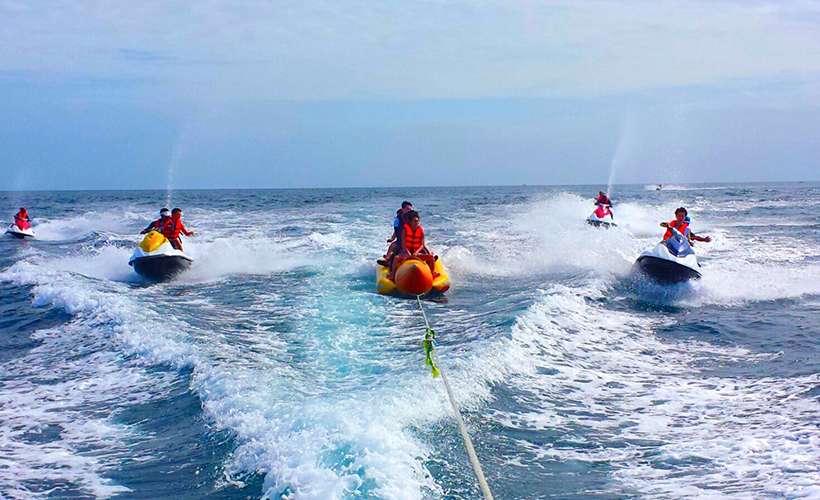
In practice, restrictions may apply selectively to activities such as high-speed watercraft use, unregulated island landings, or commercial operations without proper accreditation.
Island Hopping in a Regulated Environment
Island hopping remains a cornerstone of Lapu-Lapu City’s tourism economy, but it is now increasingly structured through accredited operators and designated routes. This shift aligns with broader coastal management strategies across the Philippines aimed at standardizing visitor flow.
Typical regulated island-hopping framework includes:
- Pre-approved island destinations and docking points
- Licensed boat operators with safety certification requirements
- Environmental fees supporting reef maintenance and conservation
- Time-bound visitation schedules to prevent overcrowding
These measures are designed to preserve both visitor experience and ecological integrity.
Impact on Local Water Sports Operators
For small and medium tourism enterprises, regulatory tightening introduces both constraints and opportunities.
Operational challenges:
- Reduced flexibility in offering ad-hoc island routes
- Compliance costs related to licensing and environmental standards
- Limitations on certain high-demand recreational activities
Emerging opportunities:
- Shift toward eco-tourism packages with higher value positioning
- Increased demand for certified, safety-compliant tour operators
- Potential for partnerships with local government tourism initiatives
Operators that adapt early to compliance frameworks are more likely to maintain market share as enforcement becomes more consistent.
Environmental Rationale Behind the Policy
The ecological context of Lapu-Lapu City is central to understanding these restrictions. The region’s marine biodiversity—including coral reefs, seagrass beds, and fish spawning areas—has experienced measurable pressure from tourism density.
Key environmental concerns include:
- Physical coral damage from boat anchoring and snorkeling traffic
- Water pollution from fuel residues and unmanaged waste disposal
- Disturbance of marine habitats due to unregulated movement patterns
Sustainability-oriented tourism governance aims to mitigate these pressures without eliminating economic activity.
What This Means for Tourists
For visitors planning island-hopping or water sports activities in Lapu-Lapu City, the regulatory environment primarily affects how experiences are structured rather than eliminating access altogether.
Practical implications:
- Booking through accredited tour providers is increasingly necessary
- Certain islands may have restricted access windows or visitor caps
- Activities may be redirected to designated zones for safety and conservation
- Environmental fees may be integrated into tour pricing structures
From a visitor experience perspective, these changes often result in more organized, safer, and environmentally managed excursions.
Long-Term Outlook for Coastal Tourism in Cebu
The direction of policy in Lapu-Lapu City reflects a broader national and regional trend toward sustainable marine tourism governance. Over time, the focus is expected to shift further toward:
- Digitized permit and booking systems for tourism control
- Expanded marine protected areas with regulated access
- Higher-value, lower-impact tourism models
- Stronger enforcement of environmental compliance standards
While short-term adjustments may require adaptation from both operators and tourists, the long-term objective is to ensure the resilience of Cebu’s coastal tourism economy.
Conclusion
The regulation of island hopping and water sports in Lapu-Lapu City is best understood not as a restriction on tourism, but as a structural recalibration of how coastal recreation is managed. By introducing clearer rules and environmental safeguards, local authorities are aiming to sustain both ecological integrity and long-term tourism viability.
For visitors, the key takeaway is straightforward: island hopping remains accessible, but it now operates within a more controlled and sustainability-focused framework designed to preserve the very environments that make Cebu a premier destination.