
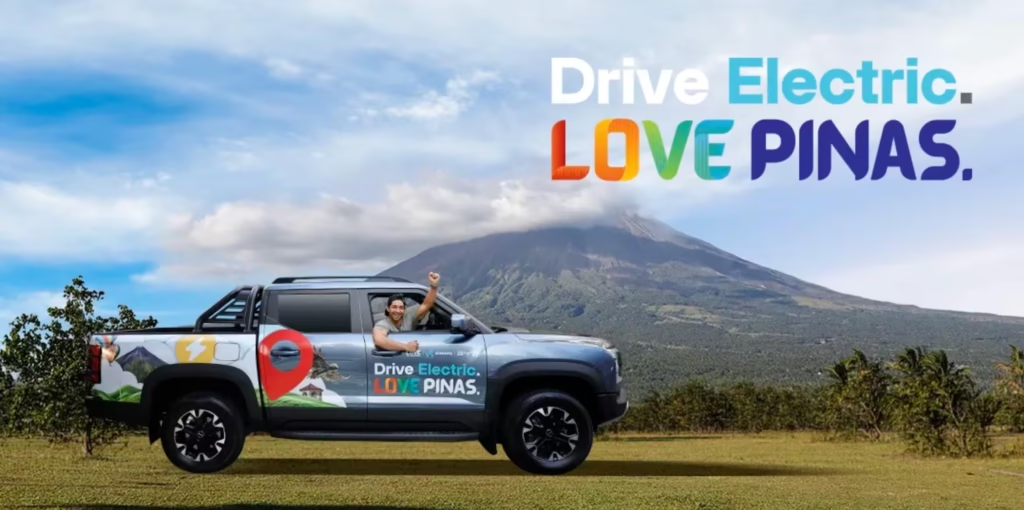
Driving Change: A Record EV Road Trip Across the Philippines
Imagine driving over 1,500 kilometers across a vast archipelago, from the northern highlands to the southern tip of a major island, without using a single drop of gasoline. This isn’t a vision of the future; it’s a recent reality that has rewritten the rules of travel in the Philippines. A groundbreaking electric vehicle (EV) road trip has not only set a new national record but has also powerfully demonstrated that sustainable, long-distance travel is not only possible but practical in this island nation.
This monumental journey, organized by electric mobility advocates, saw a convoy of modern EVs traverse the complex Philippine landscape. Starting in Baguio City, the “Summer Capital of the Philippines,” the route wound through bustling metropolises, scenic coastal roads, and challenging mountain passes, ultimately concluding in the vibrant city of Davao in Mindanao. More than just a test of endurance, this expedition served as a rolling showcase for the potential of electric transportation to redefine how Filipinos explore their own country.
Charging Ahead: Overcoming the Archipelago Challenge
The most significant hurdle for EV adoption in the Philippines, like many island nations, is the perceived lack of infrastructure. The “range anxiety” – the fear of a battery running out before reaching a charger – is a major concern. This record-breaking trip aimed to tackle that fear head-on by strategically utilizing and highlighting the existing, growing network of charging stations.
The Route and the Reality
The journey was meticulously planned to align with the locations of both public and privately-hosted charging points. Stops included:
- Major urban centers like Metro Manila and Cebu City, where commercial charging stations are becoming more common in malls and business districts.
- Strategic partner locations, including hotels, restaurants, and even dealerships, that offered destination charging, allowing the convoy to recharge during meal breaks or overnight stays.
- Proactive engagements with local governments and businesses to demonstrate the ease of installing and hosting charging facilities.
This approach proved that with proper planning, the current infrastructure, while still expanding, can support incredible journeys. It turned the trip into a live map, proving that the veins of an EV network are already spreading across the islands.
More Than Miles: The Impact of the Journey
The success of this road trip resonates on multiple levels, sending a powerful message to various sectors of society.
For the Everyday Driver: It dismantles the myth that EVs are only for short, city commutes. By showcasing EVs conquering long distances and diverse terrains—from the steep climbs to Baguio to the long stretches of highway in Luzon and the Visayas—it proves their capability and reliability. The tangible demonstration of lower operating costs (electricity vs. gasoline) and reduced maintenance makes a compelling economic case for the average Filipino motorist.
For Businesses and the Tourism Industry: The trip is a clarion call for investment. Hotels and resorts that install chargers immediately position themselves as forward-thinking, eco-friendly destinations for the growing market of EV owners. This initiative paves the way for “electric tourism,” where travelers can plan scenic routes around charging stops, boosting local economies along these new green corridors. Restaurants, malls, and attractions can attract customers by simply offering a charging plug.
For Policymakers and Environmental Advocates: The journey provides concrete evidence to support the push for stronger EV incentives and faster infrastructure rollout. It visually underscores the contribution to reduced air pollution and lower carbon emissions, crucial for improving air quality in cities like Manila and mitigating climate change. It shows that the transition to electric mobility is a key driver for sustainable national development.
The Road Forward: What This Means for the Future of Travel
This record-setting expedition is not a finale, but a spectacular starting line. It has ignited crucial conversations and provided a blueprint for the future.
Key Takeaways and Future Horizons
- Infrastructure is Growing: The trip highlighted that the charging network is already viable for ambitious travel and will only improve with increased demand and investment.
- Collaboration is Key: Success depends on partnership between the government (for supportive policies and incentives), the private sector (for investing in chargers and vehicle supply), and the public (for adoption).
- A Model for Sustainable Tourism: This journey charts a course for a new kind of Philippine holiday—one that is quieter, cleaner, and more mindful of its environmental footprint, allowing travelers to connect with the country’s stunning beauty without harming it.
- Proving Technological Readiness: Modern EVs are ready for Philippine conditions. Their performance in tropical heat, varied topography, and long-distance travel has been validated on a national stage.
The sight of silent, emission-free vehicles gliding past iconic landscapes like the Banaue Rice Terraces or the coast of Surigao is a powerful symbol of progress. It represents a break from the fossil-fuel-dependent past and a conscious drive towards a cleaner, more self-sufficient future in energy and transportation.
Conclusion: A Journey That Transforms Perceptions
The record-breaking EV road trip across the Philippines was far more than a simple adventure. It was a moving testament to innovation, planning, and a shared vision for a greener future. By turning a logistical challenge into a triumphant demonstration, the organizers and participants have done something essential: they have changed the narrative.
They have shown that electric vehicles in the Philippines are no longer a novelty or a distant promise. They are a practical, efficient, and sustainable reality ready to take drivers from the northern mountains to the southern shores. This journey has effectively plugged the nation into a new era of mobility, driving change one kilometer—and one charging station—at a time. The open road awaits, and it is increasingly electric.